









RFK: It’s so weird to me because the Democrats have become subsumed in this carbon orthodoxy. And you and I have talked about this, and what that’s done is it’s forced them to do something that you should never do if you’re an enviromentalist, which is to comoditise and quantify everything. So everything is measured by its carbon footprint – how many tonnes of carbon it produces. And the reason we protect the environment is just the opposite of that. The reason that we protect the environment is because there’s a spiritual connection. There’s a, you know, there’s a love that we have, it’s not about quantifying stuff. That’s what the devil does. He quantifies everything, right? And that is, you know, what he wants us doing. Put a number on it. And the reason we’re preserving these things is not… it’s because we love our children.
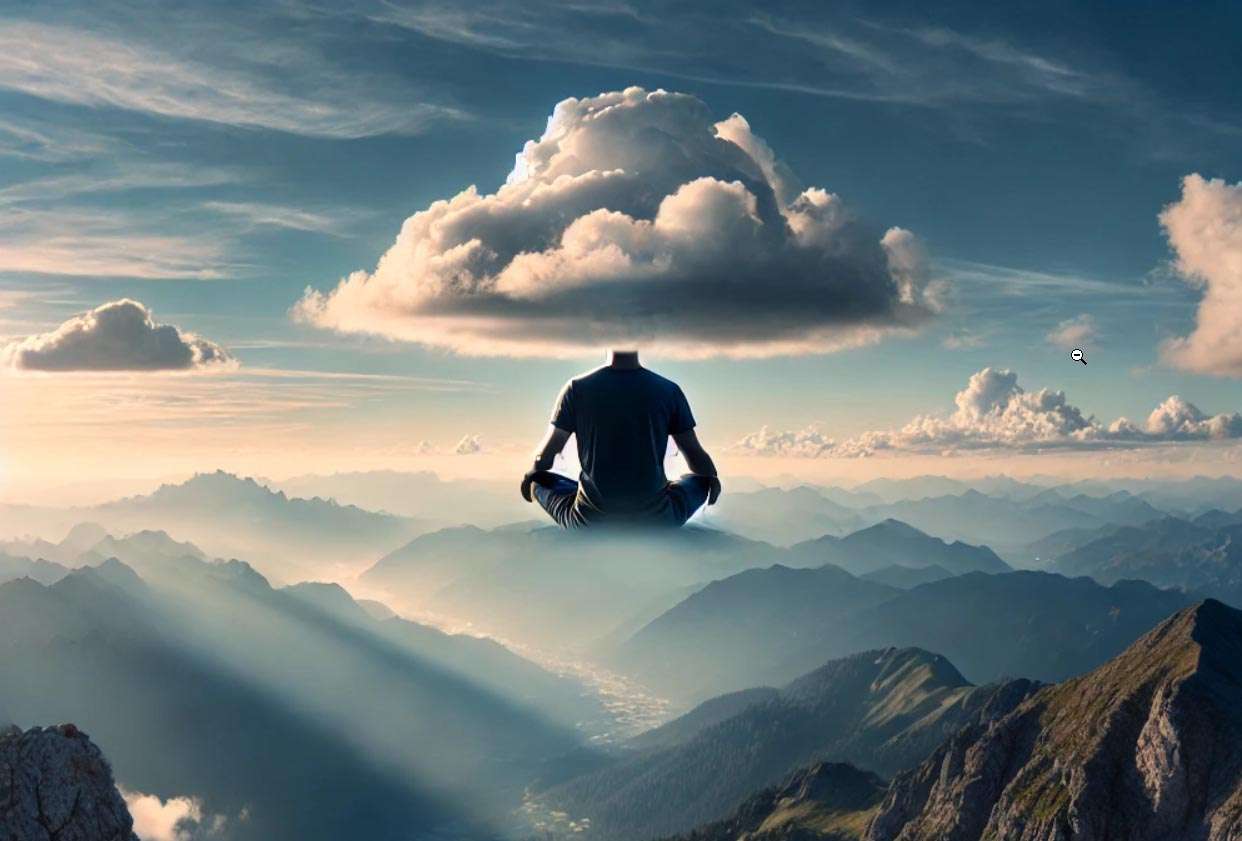
You know, God talks to human beings through many vectors, through each other, through organised religion, through the great prophets, through the wise people – the great books of those religions. But nowhere with the kind of detail and texture and grace and joy as through creation. And when we destroy nature, we diminish our capacity to sense the divine – to understand who God is and what our own potential is, and duties are, as human beings. And that…
TUCKER: I hope what you just said, by the way, is chopped up and put all over social media platform in the world –
“When we destroy nature, we degrade our own ability to experience the divine.”
RFK: It connects us to those 10,000 generations of human beings that were here before there were laptops.
The central revelation of every one of those religions always occured in the wilderness. Muhammad, who was a city boy from Mecca, had to go to the wilderness of Mount Hira; Buddha had to go into the wilderness and wander for years and then sit under the Bodhi Gaya tree to get his first revelation of Nirvana. Christ had to spend 40 days in the wilderness to discover his divinity for the first time. And his mentor was John the Baptist, who lived in a cave in the Jordan Valley and ate honey of wild bees and locusts. And, you know, all of Christ’s parables come from nature. ‘I am the vine you are the branches, the mustard seed, the little swallows, the scattering the seeds on the fallow ground – becauase that is where we sense the divine. God talks to us through the fishes, the birds, the leaves – they’re all, you know, words from our creator. And THAT is why we preserve nature.
TUCKER: YES!
RFK: It’s not because of the quantity of carbon. And by the way…
TUCKER: I feel what you said so deeply I can hardly even express it and thank you for saying that.
RFK: The best thing that you can do for climate is to restore thes soils. The soils are the solution to everything. The soil will absorb all that carbon and it’ll absorb the water. It’ll stop the flooding. It’ll give us healthy fiood. And that’s what our national policy has to be.
———————————————-
What Kennedy is highlighting here goes far beyond the surface-level debates about environmental policy. His reflections urge us to reconsider the spiritual significance of our relationship with the natural world – a relationship that has been a cornerstone of human understanding and purpose for millennia. Kennedy’s insight is a reminder that protecting the environment is not merely an act of conservation; it is a profound act of preserving our ability to experience the sacred and connect with the divine.
The commodification of nature, as Kennedy points out, strips it of its soul. By reducing the environment to mere numbers, we lose sight of its deeper essence – a sacred testament to the Creator’s wisdom and love. Every tree, river, and mountain carries an inherent sanctity, a divine language that speaks to us if we are willing to listen. It is in these untouched spaces of wilderness that humanity has historically encountered the greatest truths. From the desert solitude of Christ to the forest meditation of the Buddha, the wilderness has always been a place where the spiritual veil is lifted.
Kennedy’s words echo an ancient wisdom: the earth is not just a resource but a sacred gift. When we destroy its balance, we fracture our connection to this gift, making it harder to hear the voice of the Creator in the rustling leaves or the song of a bird. Nature, in its purest form, is a cathedral – a place where humanity can reflect on its place in the cosmos, its duties, and its potential.
From an environmentalist perspective, Kennedy’s focus on soil restoration as a solution is profound. The soil, a living, breathing entity, is the foundation of all life. When we nurture the soil, we participate in a cycle of renewal that mirrors our spiritual need for redemption and regeneration. Healthy soil is not just the key to a sustainable climate; it is a metaphor for the healing of humanity. By restoring what we have degraded, we take a step closer to our divine purpose—to be stewards of creation, not its exploiters.
What Kennedy is inviting us to consider is the possibility of a more holistic approach – one that honors the spiritual and the practical. Protecting nature is not only about saving ourselves from environmental collapse; it is about preserving the pathways through which the divine speaks to us. It is about ensuring that future generations can walk in a forest, hear the wisdom of the wind, and feel the sacred pulse of creation.
His reflections call for a shift in how we view the environmental crisis—not as a technological problem to solve, but as a spiritual awakening. It is a chance to realign ourselves with the Creator’s design and to recognize that, in caring for the earth, we are caring for the deepest parts of ourselves.


