






In the heart of the Netherlands lies a revolutionary urban project that is changing the way we think about cities and self-sufficient living.
Welcome to Oosterwold, a unique suburban development in Almere where residents aren’t just encouraged to live sustainably – they’re required to do so. Every household in Oosterwold must dedicate at least half of its property to food cultivation, making it a living laboratory for urban agriculture and community-driven planning.
This innovative experiment challenges the traditional notions of urban living, blending food production, sustainability, and community engagement into one cohesive vision. Oosterwold isn’t just a place to live; it’s a place to grow – iterally and figuratively.
The Vision Behind Oosterwold
Oosterwold was conceived as a response to the growing need for sustainable urban developments. With cities around the world grappling with issues like food insecurity, urban sprawl, and environmental degradation, Oosterwold offers a bold alternative: a suburban model that reconnects people to the land and to each other. Unlike traditional city planning, which prioritizes pre-designed housing and infrastructure, Oosterwold flips the script. Residents are given unprecedented freedom to design their homes and manage shared resources. But with this freedom comes a responsibility: at least 50% of every plot must be used for food cultivation. This requirement transforms every household into a mini farm, integrating agriculture into daily life.
The philosophy behind Oosterwold is simple yet profound: by cultivating food and sharing resources, residents not only create a more sustainable community but also foster a deeper connection to nature and their neighbours.
Life in Oosterwold: A Balancing Act
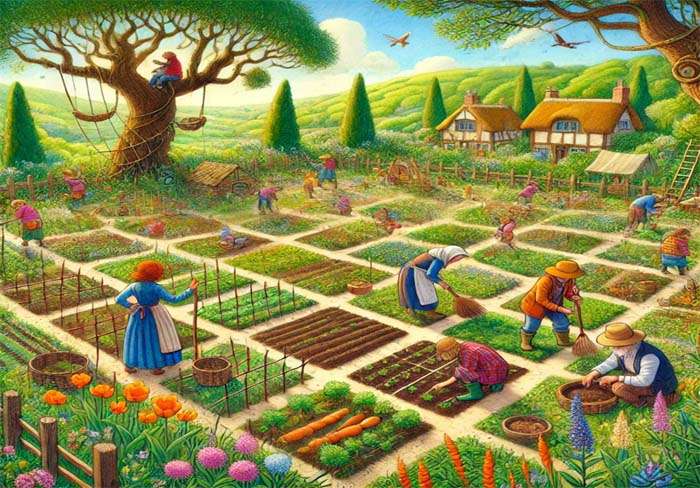
Life in Oosterwold is unlike anywhere else. Each household is responsible for growing food on at least half of its land, whether that means planting rows of vegetables, cultivating fruit trees, or maintaining herb gardens. The choice of crops is up to the residents, allowing for creativity and diversity in what is grown. But Oosterwold isn’t just about farming. Residents must also work together to manage communal infrastructure, such as roads, waste disposal, and water systems. There is no local government managing these services; instead, the community organizes itself, making decisions collaboratively. This self-sufficient approach creates a unique dynamic. Residents are not just homeowners—they are planners, farmers, and collaborators. The result is a community that is as diverse as it is united, with a shared commitment to sustainability.
The Joy of Growing Food
For many residents, the most rewarding part of life in Oosterwold is the opportunity to grow their own food. From vibrant vegetable patches to sprawling orchards, the suburb is alive with the colors and scents of homegrown produce. Families spend weekends tending their gardens, children learn where their food comes from, and neighbours share the fruits of their labour with one another.
The act of growing food has transformed the way residents think about their meals. Instead of relying on supermarkets, they enjoy fresh, seasonal produce grown just a few steps from their door. This not only reduces their environmental footprint but also brings a sense of pride and satisfaction that no store-bought food can match.
Challenges and Rewards
Of course, life in Oosterwold isn’t without its challenges. Farming, even on a small scale, requires time, effort, and knowledge. Not every resident arrives with a green thumb, and the learning curve can be steep. Weather, pests, and soil quality all present hurdles that must be overcome. Then there’s the matter of self-organization. With no central authority, residents must work together to solve problems and make decisions. This can lead to disagreements and delays, but it also fosters a sense of ownership and accountability that is rare in traditional neighbourhoods.
Despite these challenges, the rewards far outweigh the difficulties. The sense of community, the joy of harvesting your own food, and the knowledge that you’re contributing to a more sustainable future make the effort worthwhile.
A Community Food Hub
One of the most exciting aspects of Oosterwold is its Food Hub, a shared space where residents can process, store, and distribute their produce. The hub is a hive of activity, with workshops, markets, and social events that bring the community together. The Food Hub is also a platform for sharing knowledge. Experienced gardeners teach newcomers the tricks of the trade, and residents collaborate on projects like composting, seed saving, and creating pollinator-friendly habitats. This spirit of cooperation strengthens the community and ensures that everyone benefits from the collective wisdom.
A Model for the Future
Oosterwold isn’t just an experiment; it’s a blueprint for the future. Urban planners and sustainability experts from around the world are watching closely, eager to see how the project evolves and what lessons can be learned. By combining agriculture, community, and sustainability, Oosterwold offers a glimpse of what’s possible when people work together to create something new. It challenges us to rethink what a city can be and inspires hope for a future where urban living and environmental stewardship go hand in hand.
The Magic of Oosterwold
Perhaps the most magical thing about Oosterwold is the way it transforms people’s lives. Residents often describe how the act of growing food has deepened their connection to nature, their neighbors, and themselves. Children who grow up in Oosterwold learn the value of hard work, cooperation, and caring for the earth.
For the wider world, Oosterwold is a beacon of hope—a reminder that sustainability isn’t just about technology or policy; it’s about people. It’s about finding joy in the simple act of planting a seed, nurturing it, and watching it grow.
Oosterwold isn’t perfect, but it’s proof that another way of living is possible. It’s a story of innovation, resilience, and community—a story that reminds us of the power of working together to create a better future.